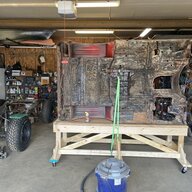
Novak Conversions Jeep Wrangler YJ engine mounts

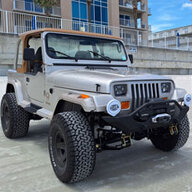
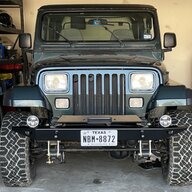
'95 Sahara, 1st YJ

I developed a leak at the lower rear of the engine and on the flywheel cover. Probably a rear main seal since I did the oil pan gasket just a year or so ago.

I decided to replace bothe RMS and the oil pan gasket. I might as well try since RMS leaks are common and I don’t like fluid leaks on my garage floor. My LJ has a similar leak but I’ll tackle the YJ first.

IMG_6228.jpeg
 
I ordered fel-pro and ultrapower seals, and a new fel-pro oil pan gasket.

While waiting on parts to arrive, I decided to replace the coolant because I noticed it was very rust colored. I replaced the coolant a couple years ago when I got the jeep, and it was very rusty. No chunks or flakes, just intensely rust-colored. Then I rebuilt my heater vent system last fall and flushed a ton of rust from the heater core. So I’m surprised it’s so rusty again.
 
I got a replacement lower radiator hose, Gates brand, and it looks more robust than whatever was on there before, and it looks a little shorter so it may not rub against the lower splash shield, which appears to be what was rubbing on the old hose.

I’m having trouble with the hose clamp to the block however. I’ve read that constant tension spring clamps are better than worm-drive, but the old clamp seems just a bit too small (I can’t quite open it large enough to get it over the flange) so I bought a Dorman clamp 2.25-2.5” and it seems too loose (seeps when I refill the coolant.

Maybe I just need a better pair of channel lock pliers to open the original clamp just a bit wider; in that tight space I can’t get a great grip with the long-handled ones I have som they keep slipping.
 
The kind with a cable? I’d never seen those before but would be worth it; i’ve been wrestling with in on my back for too long

Yes, I've had a set for 10 years or so. They work well. The lower radiator hose to water pump is the trickiest location because as you have found, the clamp is barely larger than the hose when the clamp is fully opened up. But, you'll have a lot easier time doing it with the hose clamp pliers than using channel locks or anything else.

I dealt with that when I reinstalled my engine a bit over a year ago and it all went without a hitch.
 
  • Like
Reactions: TRevs
I got the antifreeze replaced; I still needed 10 minutes to get that large clamp on but some cheap Amzon clamp pliers made it possible.

I reinstalled the oil pan and spark plugs (I had removed them so it would be easier to turn the crankshaft when replacing the rear main seal), added oil to the proper level and started the engine.

Immediately there was a new noise, sort of a mid-pitch whine. I listened for about 30 seconds before shutting it off. I couldn’t tell if it was coming from the top or bottom. I let it sit for a few minutes started it again, thinking that maybe the oil pump was just dry, It made the same noise but after a few more seconds the whine diminished a bit and I thought I heard a light tapping/clicking noise. As i was under the jeep listening, I saw a few wisps of smoke around the back of the engine/front of the transmission, so I shut it off again.
 
Possible causes:

-Crank bearing caps aren’t seated properly (I removed #7 of course and loosened 4-5-6 to try and get a little more clearance above the crankshaft for the upper seal)?

-There is some rubbing/burning of excess RTV at the rear seal. I didn’t over-apply it, but I saw a tiny bit squeeze out when I torqued the cap?

-Some debris got into a cylinder when the spark plugs were out?

-Other? (There were no oil drips on the exhaust )

Next steps:
1) run the engine another few minutes and see what happens
2) remove oil pan again and inspect the crankshaft
3) remove each spark plugs and bire scope (i have a low-quality Harbor freight scope).
4) Other?
 
Possible causes:

-Crank bearing caps aren’t seated properly (I removed #7 of course and loosened 4-5-6 to try and get a little more clearance above the crankshaft for the upper seal)?

-There is some rubbing/burning of excess RTV at the rear seal. I didn’t over-apply it, but I saw a tiny bit squeeze out when I torqued the cap?

-Some debris got into a cylinder when the spark plugs were out?

-Other? (There were no oil drips on the exhaust )

Next steps:
1) run the engine another few minutes and see what happens
2) remove oil pan again and inspect the crankshaft
3) remove each spark plugs and bire scope (i have a low-quality Harbor freight scope).
4) Other?

Were you able to get any assembly lube on the new seal surface or lube of any kind on it? The amount of time that it can take to get enough oil pumped through the crank shaft to get any oil on this new seal may have been the cause of this.
 
Were you able to get any assembly lube on the new seal surface or lube of any kind on it? The amount of time that it can take to get enough oil pumped through the crank shaft to get any oil on this new seal may have been the cause of this.

I followed the FSM as closely as I could: motor oil on crank seal surface; i turned the motor to get it 360°. Motor oil on the lip of the upper seal. Oil on the lip of the lower seal and a little soap on the outer surface of the lower.
 
I ran it again last night and it sounded more normal. Still maybe a whine and a tick , but improved. I have some audio I’ll upload later.

The smoke was coming from the exhaust pipe; I changed the antifreeze and some must have tracked down the exhaust, but whatever it was burned off completely in a few minutes.

Assembly lube can be put on anything that gets motor oil?
 
I ran it again last night and it sounded more normal. Still maybe a whine and a tick , but improved. I have some audio I’ll upload later.

The smoke was coming from the exhaust pipe; I changed the antifreeze and some must have tracked down the exhaust, but whatever it was burned off completely in a few minutes.

Assembly lube can be put on anything that gets motor oil?

Assembly lube is just that, used to lubricate parts until the oil makes it there. If you got oil on it for lube that should be fine. My understanding is that the assembly lube at least the white lithium grease type, has been used for years to assemble complete engines that may not be started immediately. If you put together an entire engine using just oil and didn’t get it running for a couple weeks, there would not be much lube that hadn’t drained off. And not everyone pre runs the oil pump before startup. I have always used assembly lube and have not always pre runs the oil pump, and have not ruined any engines.
 
Welp i started it after letting it sit for a couple days and it sounds normal now. That’s a relief. Now i get to wait on pins and needles to see if the leak actually stops
 
  • Like
Reactions: ytradio
After a couple weeks the RMS leak came back. I foolishly thought I got it right the first time. I tightened the oil pan bolts a bit more but to no avail. I guess I’ll try again in a few weeks when I have the time.

I also installed the JeepCables Daylight wiring harness. The turn signal flasher died about a year ago and the replacement was hyperflashing ever since. I think the reason was that the LED headlights have a turn signal built in, so i wanted to cut that out of the circuit. I’m also considering going to a Hella halogen, so I wanted to put in relays for that.

I installed their Big7 battery harness earlier this year and was impressed with the quality. The Daylight harness is pricey but good quality. The only issue is that it is designed for an XJ where the battery is at the front of the compartment.

I ended up anchoring the relay at the jack mount on the fender, and the positive cable was just able to reach a post on the PDC.

IMG_6546.jpeg


IMG_6547.jpeg


Routing the rest of the cables was easy. I removed all the extra wiring that carried the turn signal to the headlights, so the engine bay loks cleaner now. The new flasher includes the clicker so I now have a normal turn signal for the first time since I bought it, and better wiring in case I go to halogens.
 
I had the same issue when I did my RMS. I took my time when I did it and was very thorough. It stayed dry for probably 2 months or so? Then I started to see moisture in the area and a tiny little droplet. It never leaves any drops on my garage floor and I keep an eye on it. It's been this way for well over a year now and I am just going to leave it be until it get's noticeably worse.
 
Mine’s dripping as bad as before I got in there. It’ll leave a few drops on the garage every time I park. I’m tired of parking over cardboard, so I’m definitely going to give it another try.

Hopefully I can re-use the oil pan gasket. I found some good tips on the TJ forum, including cleaning the upper channel, because I encountered a lot of resistance up there. A job is always easier the second time because the first time I have no idea what the hell I’m doing.

I’m also getting an intermittent rasping noise from the front of the engine; probably a bearing on one of the pulleys, so I might as well take the whole thing out of service for awhile. Hopefully my 280k-mile daily driver doesn’t develop any problems while the YJ is in pieces.
 
I noticed the oil pressure on the dash has been a bit high. The needle gets up to 45-50 quickly, and will stay 60-65 while driving. That wouldn’t cause an RMS leak right? There’s no oil pressure in the pan?

Maybe I dislodged some sludge with the first RMS job (there was some on the screen pick-up) and clogged the filter?
 
Novak Conversions Jeep Wrangler YJ engine mounts